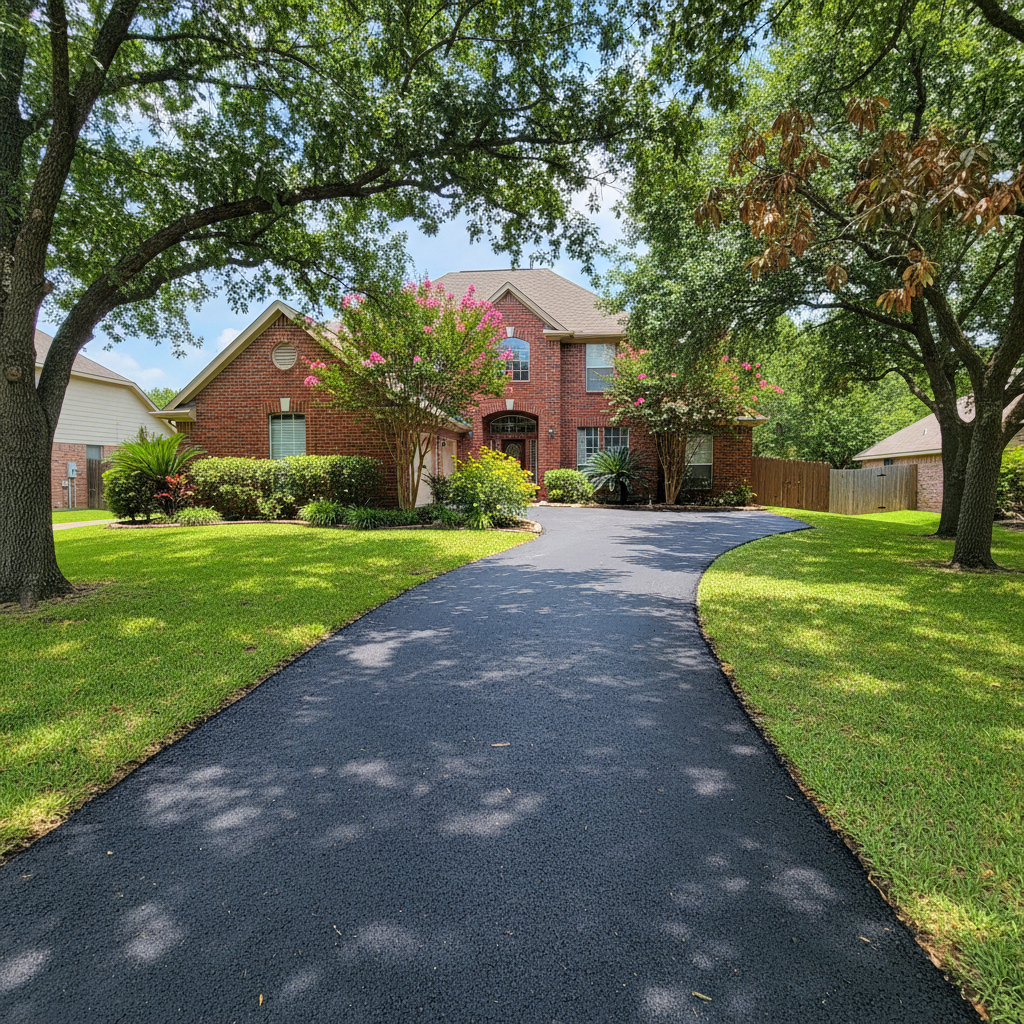
Weather around Fort Bend County does not do favors for outdoor construction. If you own a home here in Rosenberg, Texas, you already know how quickly our climate shifts from scorching summer heat to sudden heavy downpours. Asphalt Paving is tough, but it is also sensitive to these extremes. Knowing how the seasons affect your asphalt driveway helps you plan asphalt repairs at the right time and keeps your paving investment intact for many years to come.
How Our Climate Affects Asphalt Paving
Asphalt Paving relies heavily on temperature and stability during installation. When All Star Asphalt Co lays hot mix down, it needs a specific window to cool and compact properly. If the temperature is too high, the material stays soft and resists rolling. If the surface is too wet, the bond fails. Here in Rosenberg, our heavy summer humidity and high afternoon temperatures mean timing is everything.
Beneath the surface, we deal with expansive clay soils. These soils swell up when we get heavy autumn rains and shrink right back down during dry summer spells. That constant shifting puts immense pressure on your driveway sub-base. When the base moves, the asphalt above it cracks under the strain. That is why drainage and proper base compaction matter just as much as the thickness of the top layer.
Picking the Right Paving Windows
Homeowners should not just schedule Asphalt Paving work whenever it fits a calendar. Fall and spring offer the most forgiving weather windows for larger projects. During these months, temperatures settle into a moderate range where the asphalt can cure at a steady, even pace.
- Spring gives the ground time to dry out from winter moisture, providing a stable platform for new base work.
- Fall brings cooler days and lower humidity, allowing fresh Asphalt Paving to cure thoroughly before any winter chill sets in.
- Summer projects are entirely doable, but All Star Asphalt Co often has to start early in the morning to beat the brutal afternoon heat and sudden pop-up thunderstorms.
All Star Asphalt Co always looks closely at what the weekly forecast holds before bringing equipment out to a residential site. Rushing Asphalt Paving through a rainstorm or a 95-degree afternoon leads to premature failure, and nobody wants that.
Year-Round Defense for Your Driveway
Protecting your Asphalt Paving is not just about the day it gets installed. You have to maintain it as the seasons turn. Summer sun bakes the natural oils right out of the pavement, leaving it dry, brittle, and prone to oxidation. To fight back against that UV damage, schedule a fresh coat of sealants every couple of years. Sealcoating acts like sunscreen for your driveway while locking out moisture.
Keep an eye out for small cracks as the seasons change. When autumn rains hit Rosenberg, water pools in minor surface fractures and works its way down to the sub-base. Once water gets trapped down there, temperature shifts or simple soil movement will turn a hairline crack into a crumbling pothole. Sealing those cracks early stops the damage in its tracks. Take care of your pavement when the weather cooperates, and the Asphalt Paving will take care of your vehicles for decades.