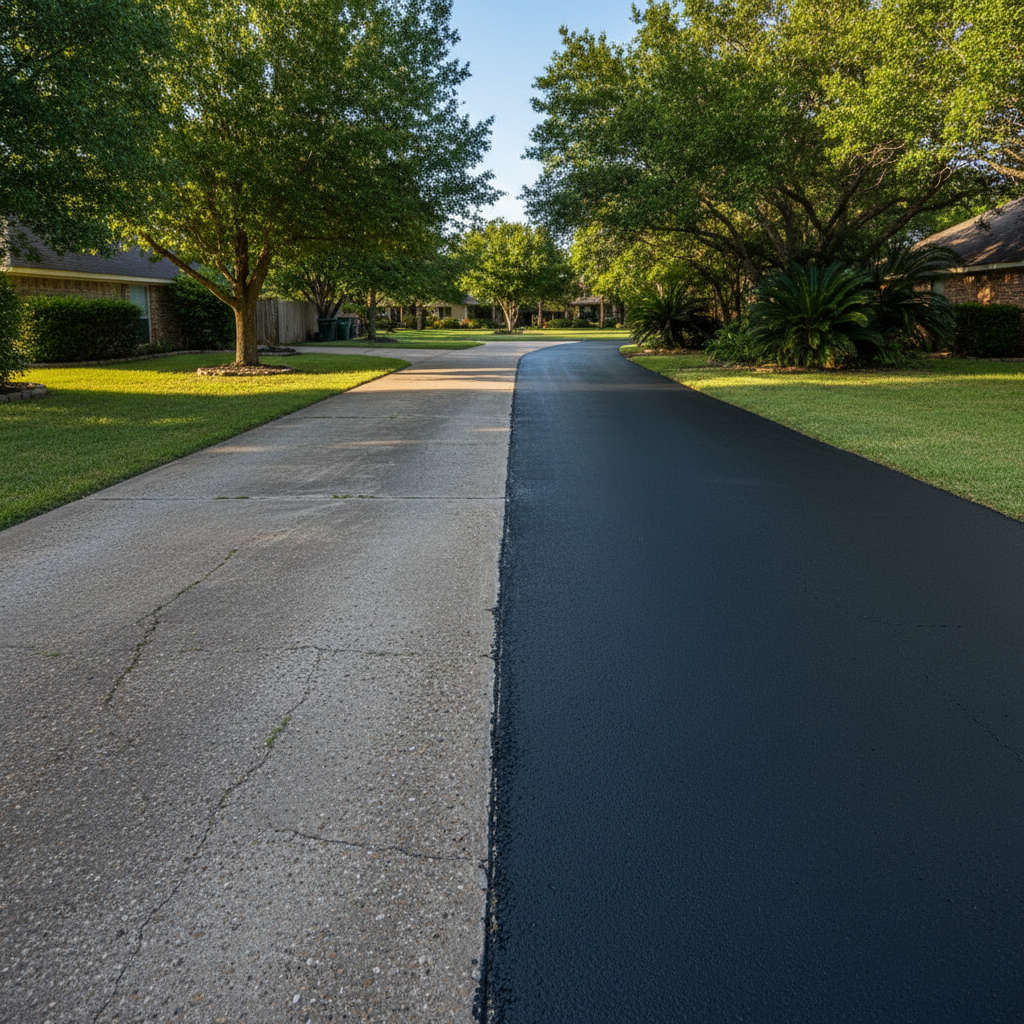
Alright, let's talk about sealcoating. Maybe you've got a new asphalt driveway, or maybe it's been a few years since it was laid down, and you know it needs some protection. Good for you, thinking ahead! But then you start looking into it, and suddenly there are different types of sealcoat materials. It can get confusing fast, especially when folks are throwing around terms like 'emulsion' and 'refined tar.' What's the real deal for your place right here in Rosenberg?
I've been working with asphalt for a long time — seen all sorts of driveways and parking lots hold up (or, well, not hold up) to our Texas sun and those heavy rains. When it comes to sealcoating, you're generally looking at two main contenders: asphalt emulsion sealers and refined tar sealers. Each has its good points and its not-so-good points, and knowing the difference can save you a lot of headaches and cash down the road, believe me.
Refined Tar Sealers: The Traditional Heavyweight
For years, refined tar sealers, often called coal tar sealers, were the absolute standard. And for good reason, too. These things are just tough. They're made from coal tar, which is a byproduct of coke production. What you get is a really durable, chemical-resistant coating that stands up well to things like oil, gas, and even some of the harsher chemicals that might drip from a car.
Durability: This is where refined tar truly shines. It forms a hard, resilient barrier that's excellent at protecting your asphalt from oxidation caused by UV rays and water penetration. It's less likely to soften in our intense summer heat, which is a big plus when temperatures hit triple digits like they do here in August. That means your driveway stays blacker, longer, and holds up better to traffic. Pretty good, huh?
Appearance: Refined tar gives you that deep, rich, matte black finish most folks associate with a freshly sealed driveway. It looks sharp and clean.
Maintenance: Because it's so durable, you generally don't need to reapply it as often as some other types. Every 2-3 years is a common recommendation, depending on traffic and how much sun your driveway gets.
Cost: Historically, refined tar sealers were a bit more expensive per gallon than asphalt emulsion. However, that longer lifespan can often make the overall cost of ownership lower in the long run.
Now, there's been some talk about environmental concerns with coal tar, and some places have even restricted its use. Here in Texas, it's still an option, but it's something to be aware of. We at All Star Asphalt Co. always make sure to follow all local and state regulations, of course.
Asphalt Emulsion Sealers: The Modern Alternative
Then you've got asphalt emulsion sealers. These are made from asphalt cement, just like your driveway, but they're mixed with water and emulsifying agents to make them liquid. They've become a lot more popular, partly because people see them as a 'greener' option.
Durability: Asphalt emulsion sealers do a decent job protecting against water and UV damage, but they're generally not as tough or chemical-resistant as refined tar. They can be more susceptible to softening in extreme heat and might show tire marks or scuffs more readily. They also tend to fade to a grayish color faster than refined tar, which is a bummer if you like that fresh black look.
Appearance: When first applied, asphalt emulsion gives a nice dark finish, but it's often not as deep black as refined tar. As I mentioned, it tends to fade quicker, so that fresh look might not last as long.
Maintenance: You might find yourself needing to reapply asphalt emulsion every 1-2 years to maintain optimal protection and appearance, especially if your driveway sees a lot of sun or heavy use.
Cost: Typically, asphalt emulsion sealers are less expensive per gallon upfront. This can make them attractive for folks on a tighter budget, but remember what I said about durability and reapplication frequency – that initial saving might not hold up over time.
Which One's Right for Your Rosenberg Home?
So, you're in Rosenberg. Maybe you're in one of those older neighborhoods with big oak trees, or perhaps you're out in a newer development off Highway 36. Either way, your asphalt driveway is going to take a beating from the sun, the occasional heavy downpour, and the general wear and tear of daily life. We also deal with expansive clay soils around here, which means a stable, well-protected asphalt surface is even more important to prevent any issues from ground movement affecting your pavement.
If you're looking for the absolute best protection, the longest-lasting finish, and don't mind a slightly higher upfront cost for better long-term performance, I'd lean towards a refined tar sealer. It just holds up better to our specific conditions – the heat, the sun, and the general abuse a driveway takes. You'll get more bang for your buck over the years, no doubt.
If budget is your absolute top priority and you're okay with more frequent reapplications, then asphalt emulsion can be a decent choice. It'll still offer protection, just not quite the same level of robust durability or color retention.
Ultimately, a good sealcoat, no matter the type, is better than no sealcoat at all. It's like putting sunscreen on your skin or painting your house – it protects your investment. But if you want the best protection for your asphalt here in Rosenberg, especially with our intense climate, refined tar sealers are usually the way to go in my book. Give us a call at All Star Asphalt Co. if you want to talk specifics about your driveway; we're always happy to help you figure out the best plan.